


 Metropolitan France
 Deutschland
 Belgique
 Suisse
 Österreich
 España
 Italia
 Nederland
 Danmark
 Sverige
 Portugal
 Polska
 Luxembourg
 Other countries


Available colours:


Available colours:


Available colours:

Available colours:


Available colours:


Available colours:


20% off
On the entire city section* with the code CITY20*
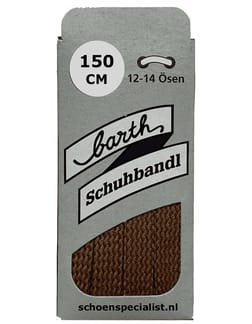
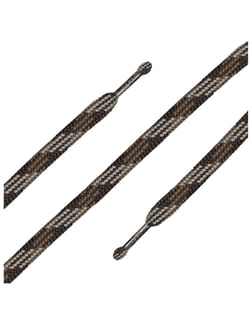

Too short, too long or simply worn out? Hiking boot laces are the subtle detail that determines how well your foot is supported on the trail. Explore our selection designed for durability, comfort and knot reliability, mile after mile.
How to choose your hiking boot laces
On rocky paths or long treks, lacing directly affects foot support, step precision and blister prevention. While a city lace simply closes the shoe, a hiking boot lace must withstand abrasion, moisture and hours of tension without failing. That's why our models suit both casual walkers and committed hikers, adapting to all hiking boots.
Durability and strength
Repeated friction against eyelets, dried mud, abrasion on rocks: the demands on a hiking lace are nothing like those on a city shoe. For this reason, we favour models in polyester or braided nylon, two materials known for their resistance to wear and water. A brand like Barth, a technical lace specialist, offers reinforced versions designed for demanding use, with water-repellent treatments to prevent fibres from soaking up moisture and freezing in cold weather.
Comfort and optimal fit
A good lace does more than hold: it keeps the knot tight without creating pressure points on the top of the foot. The thickness and flexibility of the braid allow you to adjust tension zone by zone-looser over the instep, firmer around the ankle to lock the heel on long descents. This fine-tuned fit makes all the difference between a pleasant outing and a day ruined by rubbing.
Types of laces available
Which lace for which boot? The answer depends on your boot's lacing system and your activity. Three main types cover most hiking needs, from traditional laces to quick-lacing systems.
Round laces
Round laces slide easily through eyelets and hooks, making them especially suitable for high-cut boots and hook lacing systems common on trekking models. Barth offers round and half-round laces in many colours and lengths, showing their versatility: robust and universal, they fit most hiking boots and are a safe choice if you're unsure.
Flat laces
Wider flat laces spread pressure over a larger area and hold their knot better once tightened. This makes them ideal for low-cut hiking boots and approach shoes, where comfort over the top of the foot is more important than ankle lock. Élémenterre's Twist laces continue this approach with a durable design, perfect for those wanting to re-equip their boots without frequent replacements.
Quick-lacing systems
The third option, quick-lacing, replaces the traditional lace with a thin cord and sliding lock: a single pull tightens the whole foot in a second, with no knot to redo. The Quicklace Kit from Salomon, one of the most popular in this category, lets you fit or replace this system on compatible boots. A favourite for trail running and fast hiking, where you want to adjust tension on the go without stopping.
Which lace material is best for hiking?
When choosing materials, consider how they handle water and wear:
- Polyester: the best balance of strength, lightness and knot hold, ideal for regular use.
- Nylon: more elastic, it absorbs repeated shocks and high tension well.
- Cotton: best avoided for hiking, as it absorbs water and wears quickly; waxing old cotton laces can help with moisture resistance, but it's only a temporary fix.
If you're hiking in wet, snowy or alpine conditions, choose waterproof or water-repellent hiking boot laces: they don't absorb water, dry quickly and keep a reliable knot even when soaked.
How to lace your hiking boots properly
Proper lacing doesn't mean pulling as tight as possible. The key is to distribute tension smartly according to the terrain and length of your walk, so your foot is held without being compressed.
Lacing techniques for optimal support
Depending on your route, a few simple adjustments make all the difference:
- Uphill: keep the forefoot slightly looser to allow ankle flexion.
- Downhill: lock the lacing at the ankle with a blocking knot on the hooks to stop your foot sliding forward and protect your toenails.
- Long distances: lace moderately and evenly to reduce pressure points.
For high-cut boots, lock the lacing at the junction of the foot and upper. This lets you adjust instep and ankle tension separately for a truly tailored fit. If your feet hurt despite good lacing, you may need something else: our dedicated foot care tips can help fine-tune your fit.
Tips to avoid foot pain
Most pain comes from uneven lacing rather than the boot itself. Loosen sensitive areas, check for folds on the tongue, then retighten after a few minutes' walk, once your foot has settled. A suitable hiking insole can further improve internal support. Also beware of the wrong lace length: too short means a tiny, unreliable knot; too long drags on the ground and can catch.
Hiking lace FAQ
What length laces should you choose?
Length mainly depends on the number of pairs of eyelets and hooks on your boots. As a guide:
- Around 120 cm for low-cut boots.
- Around 150 cm for mid boots.
- 180 cm or more for high-cut models with hooks.
If in doubt, use your original lace length and round up: a slightly too long lace is easy to adjust, but too short will stop you in your tracks.
How to care for your laces
Remove your laces regularly to rinse off mud and sand, which wear fibres as much as eyelets do. Wash with lukewarm soapy water and air dry, away from direct heat that could weaken the material. Check the tips (aglets) too: once they fray, threading through eyelets becomes difficult and it's time to replace them. The same care applies to your boots, whose regular maintenance will extend their lifespan.
Can you replace your hiking laces yourself?
Rest assured, this is one of the easiest repairs you can do. Remove the old lace, note the threading pattern, then fit the new one, keeping both ends equal. If the original tip is damaged, wrap a small piece of tape around the end for smooth threading.
How to stop laces coming undone while hiking?
A few habits will keep your knot secure from start to finish:
- Use a double knot or surgeon's knot, with an extra loop before the first bow, for much more stability on rough ground.
- Choose textured or flat laces, which grip better and slip less than very smooth round laces.
- Tuck the loops under the lacing to stop them catching on vegetation.
Find a selection of laces and accessories on Snowleader to extend the life of your favourite boots.



Sign up for our newsletter
Be the first to hear about promotions, sales, special offers, snowleader events, and new brands added to our catalog!
By signing up for our newsletter, you agree to receive our personalized emails and to allow us to track whether you open them. You can change your consent at any time after you first receive a communication, or after creating your account, if applicable.


