


How to choose your running shoes?
Having trouble choosing your running shoes between specialized models and technical criteria? Understanding your stride type, terrain, drop and size are important steps in making a strategic choice. Shop now to find out how to optimize your selection with step-by-step advice, easy-to-apply criteria and recommendations tailored to your goals.
Contents
Understanding your stride type
Supination, pronated or universal?
The stride affects the way your foot lands on the ground. It can be supinated, pronated or universal. Identifying your stride type is essential to choosing the right shoes for your body type and running style.
You can identify your stride by looking at the wear on your old shoes, or by carrying out a stride analysis test in a specialist store. A pronated stride is one in which the foot sinks inwards, while a supination stride is characterized by an outward tilt. The universal stride combines good foot alignment and balanced pressure distribution.
| Stride type | Features | Recommended model |
| Pronated |
|
|
| Supination |
|
|
| Universal |
|
|
Wearing the wrong shoes for the way you run can increase the risk of injury. An inward-sloping stride puts more strain on the knees and hips, while an outward-sloping stride is more prone to sprains. Even "neutral" supports, combined with unsuitable shoes, can lead to foot and ankle pain.
To meet these varied needs, the major brands have developed specific technologies: stability reinforcements, advanced cushioning systems or even hybrid solutions combining comfort and responsiveness.

Understanding the anatomy of running shoes
Before choosing your ideal pair, it's important to understand that each component of a running shoes plays a key role. Their combination determines comfort, performance and injury reduction.
The midsole
The midsole is the layer between the outsole, in contact with the ground, and the insole, under your foot. This is where the majority of technologies developed by brands are concentrated. The midsole is the "engine" of the shoe, and the better adapted it is to your running style, the more optimized your running sensations will be.
- Classic EVA foams, light and resistant, they offer a good compromise between cushioning and dynamism.
- New-generation materials (PEBA, Infuse, ZoomX, etc.), more reactive, improve energy feedback and therefore your performance.
- Inserted carbon or TPU plates increase propulsion with every stride, but are less comfortable for everyday use.
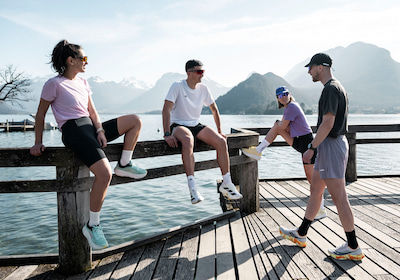
Cushioning, the key to comfort
The cushioning of a running shoes for men as for women, is mainly found in the midsole. It protects your joints and muscles from repeated impacts on the ground. Your choice of armoti depends on whether you're aiming for long-lasting comfort or explosive performance.
- Maximum cushioning: ideal for long distances or heavy runners.
- Moderate cushioning: perfect for everyday training and runners looking for a balance between comfort and dynamism.
- Firm cushioning: favored by fast runners, this cushioning feels closer to the ground.
What is the drop and why is it important?
The drop is the difference in height between the heel and the forefoot.
- High drop (10-12 mm). It favors a heel attack, comfortable for beginners.
- Intermediate drop (6-8 mm). The perfect balance between comfort and a more natural stride.
- Low drop (0-4 mm). Similar to barefoot running, but puts more strain on the calves
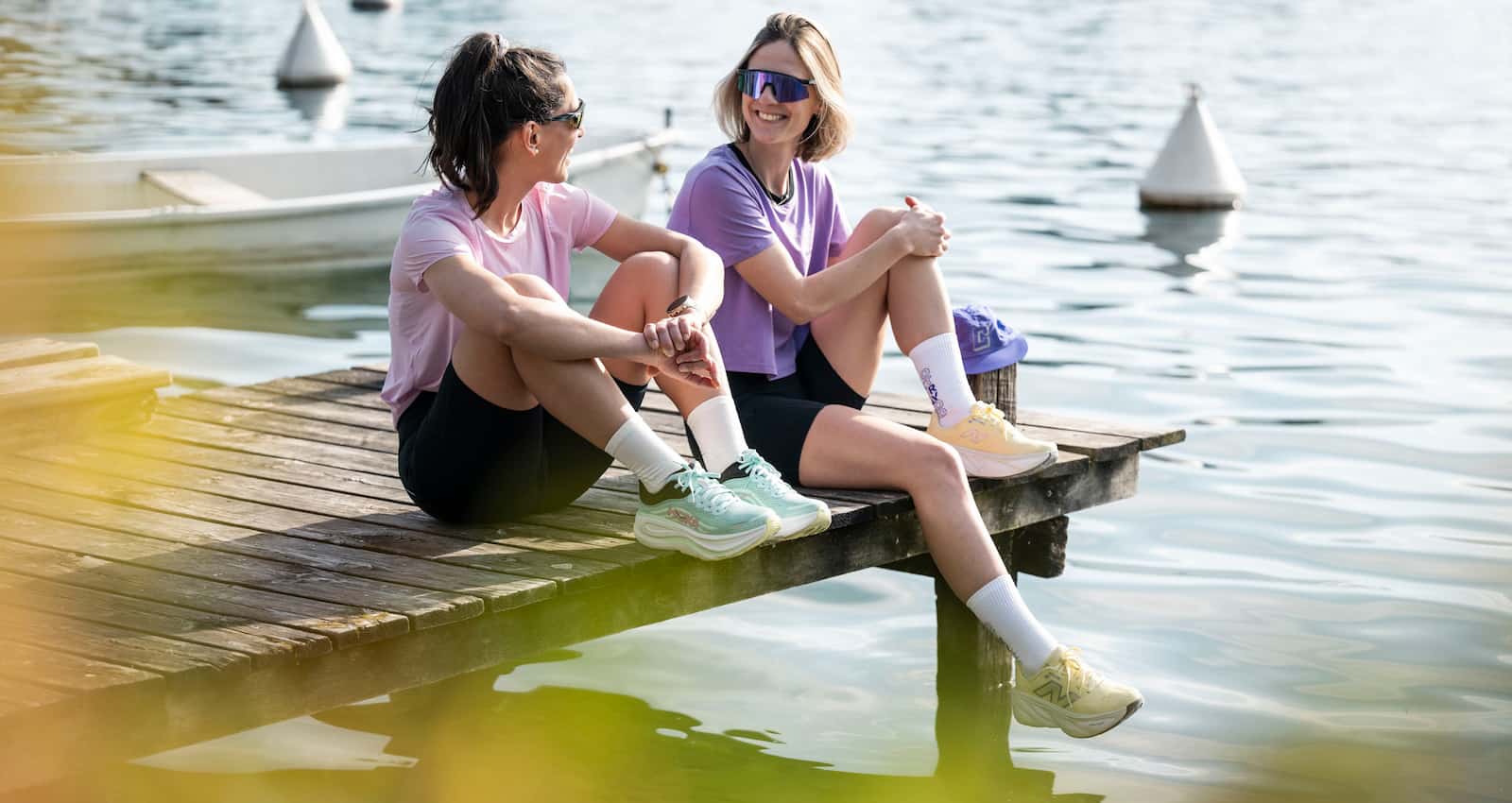
The stability of running shoes
Stability is crucial to limit the risk of injury, especially if you have a pronated stride. Some shoes incorporate lateral reinforcements or firmer foam on the inside to guide movement and keep the foot properly aligned.
The relaunch, a dynamic shoe
Boost refers to a shoe's ability to propel you forward. It depends mainly on the midsole and integrated technologies (reactive foams, carbon plate, rocker design). If you're looking for speed and a fluid stride, you'll want a model with good recovery.
Shoe weight
Weight has a direct influence on how you feel when running.
- Light" shoes often weigh less than 250 g per shoe. They are perfect for fast sessions, competitions or road races. Their streamlined construction favors responsiveness and energy return. On the other hand, they sometimes offer less protection, and therefore require good running technique to avoid injury.
- On the other hand, slightly heavier running shoes, weighing around 300 g and more, offer maximum comfort. They often feature more generous cushioning, support reinforcements and sturdier insoles. As a result, they offer better joint protection and reduce muscle fatigue over long distances. They're the ideal choice for regular runners, marathoners or those who value comfort over pure performance.
There's no such thing as a perfect universal weight; it all depends on your training style. For everyday training, a slightly heavier but protective shoe is often preferable. For competitions, an ultralight model will be a real asset. And if you're into trail running, you'll have to accept a higher weight in exchange for better grip and enhanced protection.
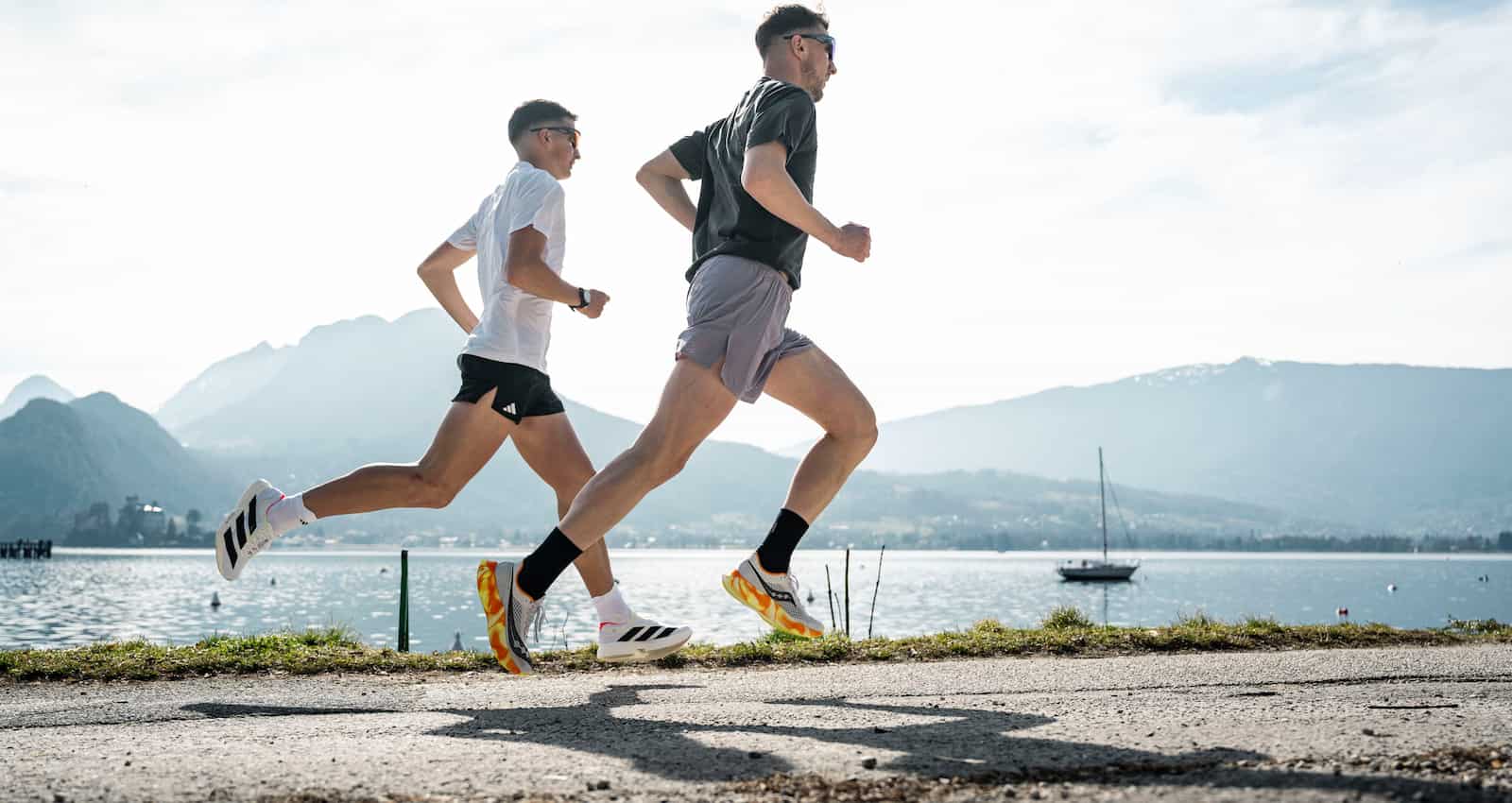
Flexibility
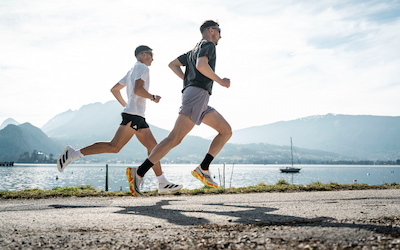
The flexibility of a shoe determines its ability to support the natural movement of the foot. A shoe that's too rigid can slow down the stride, while a very flexible shoe gives a more natural feel but with less support. To assess the flexibility of a running shoe, simply take it with both hands and try to twist it slightly. If the sole twists easily, it means the shoe is supple and promotes a more natural stride, ideal for runners looking for fluidity and freedom of movement. If, on the other hand, the shoe offers strong resistance, it's more rigid and more suited to technical terrain or to athletes needing extra stability and support.
Mesh: comfort and breathability
The upper of a running shoe is often made of mesh, a textile material that plays a central role in comfort and breathability. Classic mesh is light and airy, allowing good air circulation and keeping the foot at a pleasant temperature, ideal for road running or daily training.
More advanced models use a technical mesh, such as engineered mesh or 3D knit, which moulds perfectly to the shape of the foot, offering precise support and limiting friction thanks to a reduced number of seams.
Finally, some models feature reinforced mesh, particularly useful for rough terrain, as it is more resistant to impact, abrasion and mechanical stress while retaining breathability and lightness.
The outsole: grip above all else
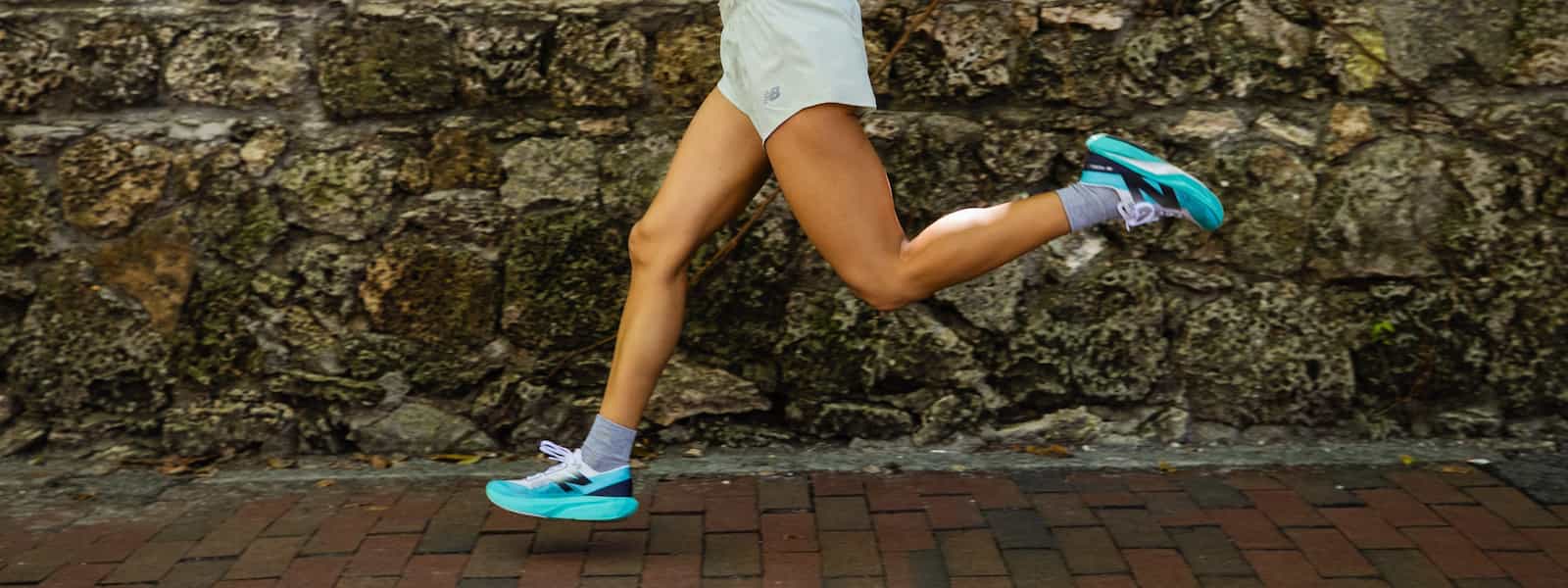
The outsole is the part of the shoe in direct contact with the ground, and plays a crucial role in grip and stability. On the road, a thin sole with flex grooves facilitates the rolling of the foot and improves the fluidity of the stride. On paths or uneven terrain, a crampon-equipped sole guarantees better grip and a more secure hold. Finally, shoes with top-of-the-range insoles, such as Vibram® or Continental®, offer optimum grip, even on wet ground, while increasing comfort and stability with every step.
Choosing your running shoes according to the type of terrain
Road race vs. nature trail
Road running shoes emphasize lightness and cushioning for optimum comfort on asphalt, while models designed for trails or forest paths focus on grip, protection and stability. Your choice of pair will therefore depend on the type of terrain you frequent most, between urban asphalt and wilderness trails.
Criteria to be prioritized for the road :
- Cushioning: Absorbs repeated shocks on asphalt, reducing fatigue and the risk of injury.
- Lightweight: for a fast, efficient stride, ideal for intense training and competition.
- Stability: Essential for runners with excessive pronation, offering targeted support.
Key elements for nature trails:
- Grip: Slightly more pronounced crampons for optimum traction on different surfaces.
- Protection: Reinforced soles and uppers to prevent impact and twisting on rough terrain.
- Stability: maintains balance on uneven surfaces, limiting sprains and strains.
- Durability: Abrasion-resistant yet flexible materials
Alternating your pairs between different surfaces extends their lifespan. Asphalt wears out cushioning more quickly than paths. A training shoe lasts 800-1000 km versus 400-500 km for a competition pair. Rotation reduces the risk of overuse injuries by 39%.
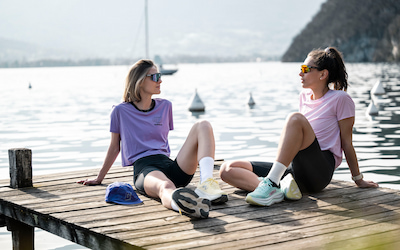
Choose your shoes according to your training and competition goals
Training: endurance and VMA
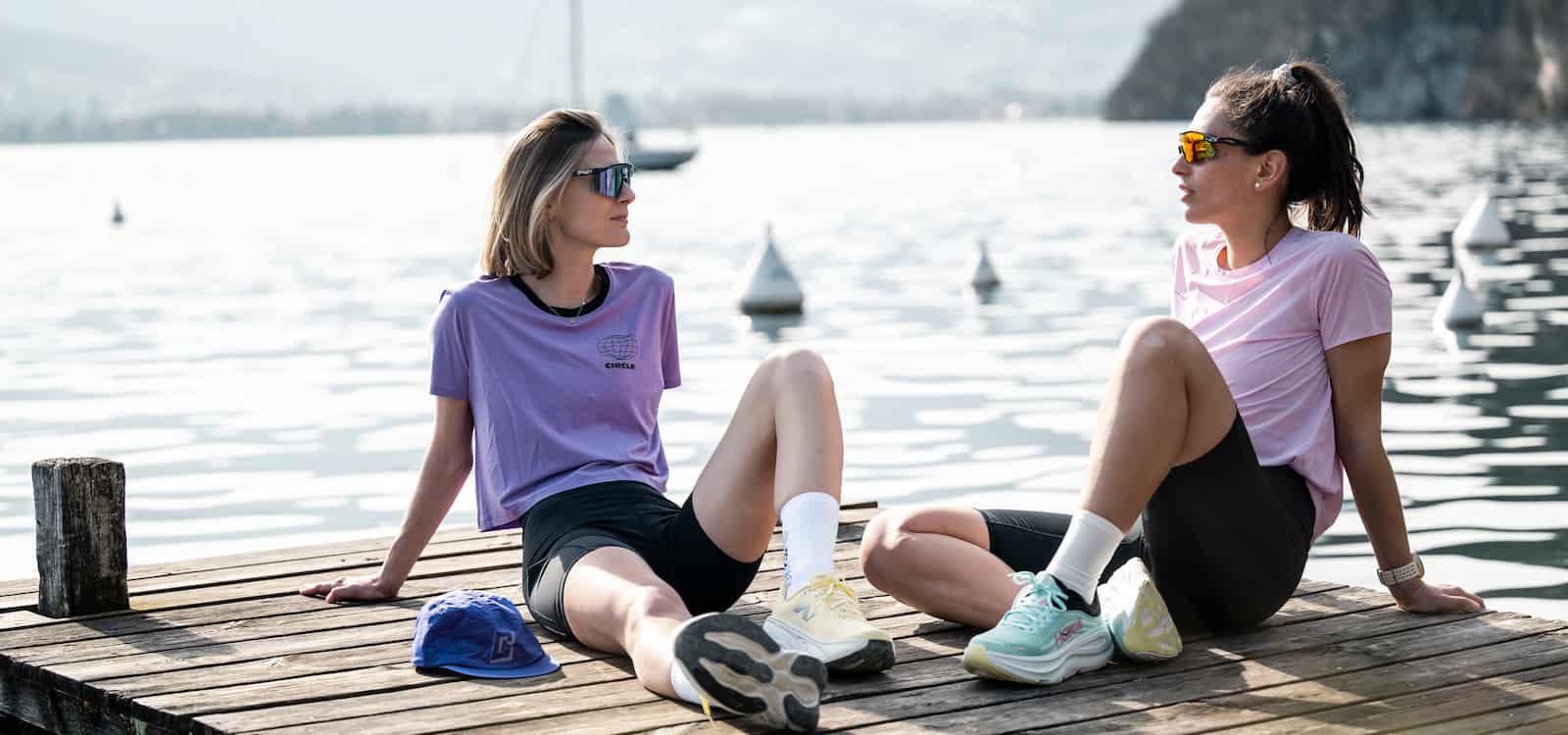
Daily training shoes offer comfort and cushioning for endurance runs. Those designed for VMA sessions are distinguished by their dynamism and lighter cushioning for faster paces.
Longer distances require pronounced cushioning to absorb repeated shocks. Models like the Hoka Bondi 9 and Cloudsurfer 2 offer this comfort. For VMA sessions, opt for a lighter shoe like the New Balance Rebel V4 and Adidas Boston 12.
Competition: lightweight and responsive
Competition shoes are characterized by their low weight and maximum responsiveness. They often incorporate a carbon plate for optimum propulsion. These features help to improve performance in events of all distances.
Competition shoes should be reserved for races or fast sessions. Their average lifespan is around 300 km maximum. For a 10km or half-marathon, opt for a lightweight model like the Hoka Mach X2. For a marathon, opt for a balance between responsiveness and comfort with a shoe like the Saucony Endorphin Pro 4.
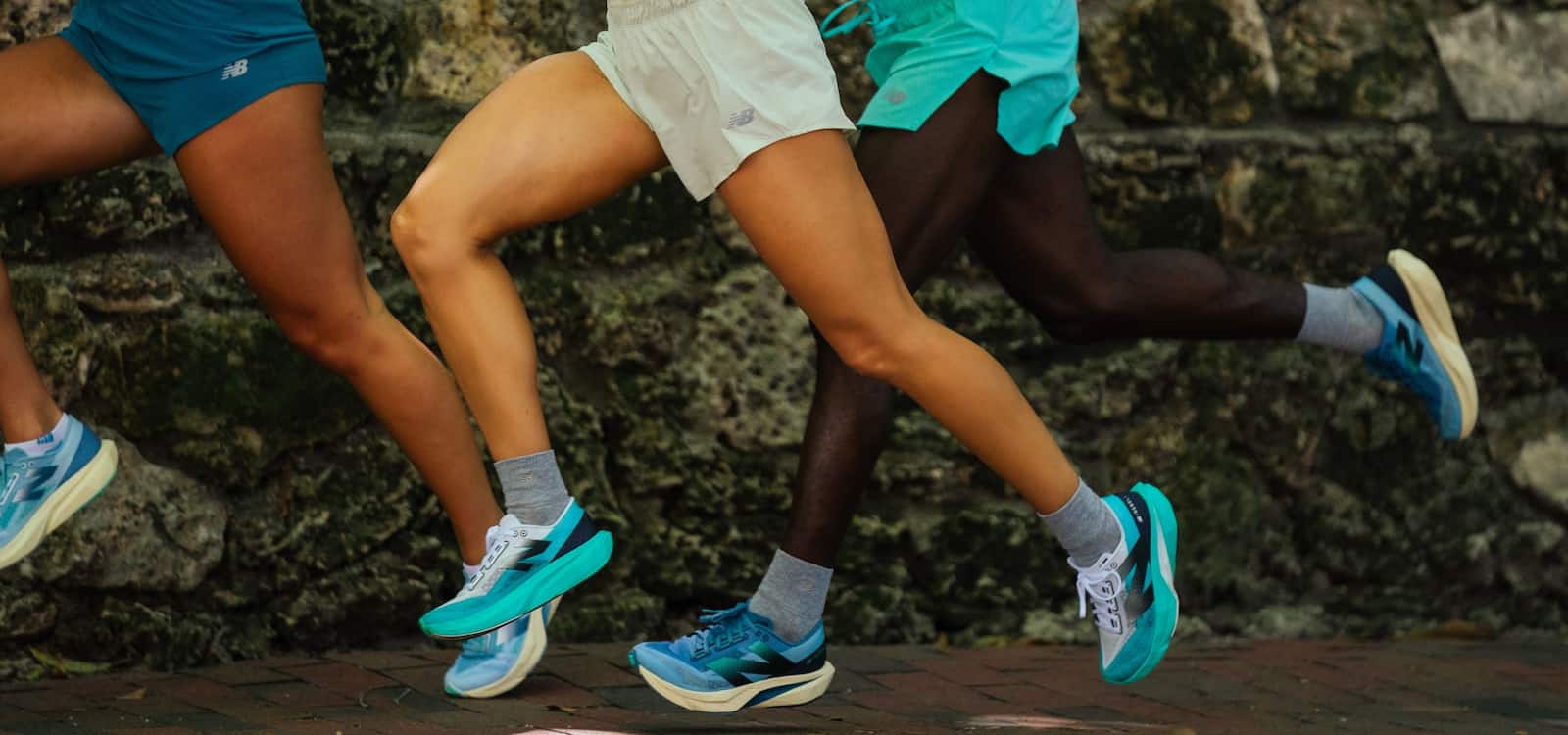
The importance of drop in your choice of shoes
Different types of drop and their advantages
The drop is the difference in height between the heel and the forefoot, measured in millimeters. This parameter influences your stride, posture and comfort while running. Understanding this technical criterion will help you choose the right shoe for you women's running shoes to suit your running style.
Comparison of drop types
| Drop type | Height | Rider profile | Stride style | Key benefits | What you need to know |
| High drop | > 6 mm | Beginners or heel-first runners | Heel attack | High levels of cushioning reduce strain on the Achilles tendon | Ideal for most runners |
| Medium drop | 4 to 6 mm | Regular runners | Midfoot attack | Good compromise between comfort and dynamics | Enables a smooth transition |
| Low drop | < 4 mm | Trained runners | Forefoot or midfoot attack | Natural feel, better proprioception | Requires good technique |
| Drop zero | 0 mm | Experienced runners | Very natural stride | Position foot completely flat, increase muscle workload | Gradual transition essential |
Models with a drop greater than 6 mm are suitable for runners who place the heel first. Those with a drop below 6 mm are for regular runners who place the forefoot or midfoot first. The zero drop, with the foot flat, is aimed primarily at experienced runners.
An unsuitable drop can increase the risk of injury. It's essential to opt for a drop that's adapted to your biomechanics to avoid frequent aches and pains. That's why Snowleader offers you Running Shoes to suit every profile.
Tips for a gradual transition to a lower drop
Switching to a lower drop requires a gradual adaptation. Start by alternating your current shoes with intermediate-drop models. Strengthen your calves and Achilles tendon with targeted exercises. Avoid long outings in your new shoes at first. Introduce them gradually at a rate of 1 to 2 outings a week to allow your body to adapt smoothly. Many runners have noticed improvements by switching to a drop adapted to their stride. Some note a straighter posture, others a more natural stride.
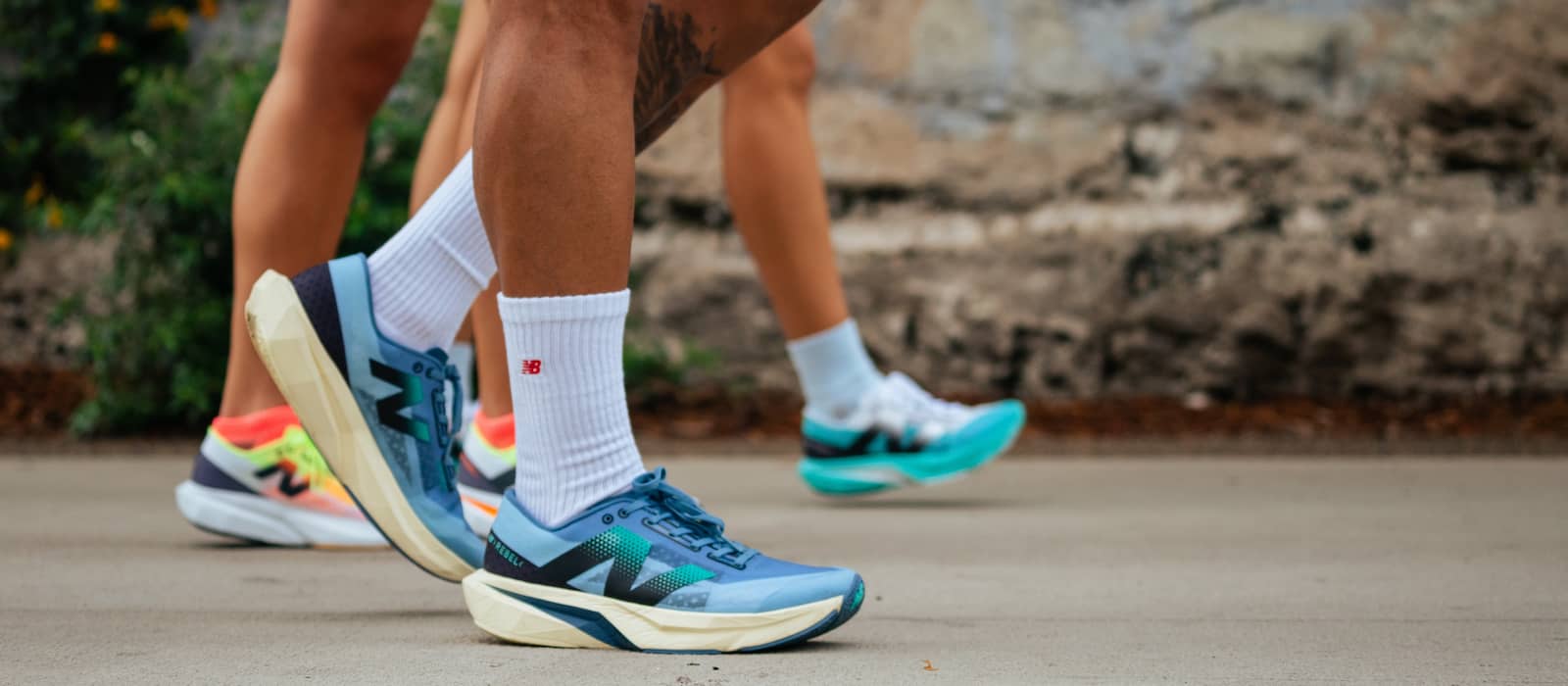
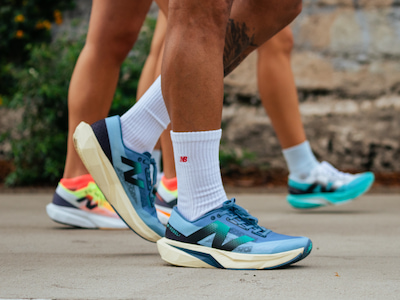
Consider your size for the best choice
Light template vs. strong template
Weight and morphology influence the choice of shoes. Large runners prefer cushioning and stability. Lightweight runners opt for lightweight, responsive models.
Your size determines the impact on the ground. Runners weighing more than 80 kg for men or 65 kg for women should opt for high levels of cushioning. This reduces the risk of injury from repeated shocks.
Lightweights benefit from dynamic shoes like the Hoka Mach 6. Stronger builds need sturdy models like the CloudSurfer Next.
Size affects the lifespan of shoes. A light runner can expect to cover 400-500 km, compared with 300-400 km for a heavy runner. Models with reinforced insoles are more resistant to wear.
The best shoes for beginning runners
When you start running, you need the right shoes for your stride, size and terrain. Snowleader offers a wide selection of pairs accessible to beginners, with versatile and comfortable models to ease your first steps.
Opt for training shoes with good cushioning if you're just starting out. Models like the Hoka Bondi 9 or Clifton 10 offer a balance between support and lightness.
For those on a tight budget, find affordable yet reliable pairs. Models like the Saucony Guide 18 or the New Balance Propel V5 combine quality and affordability.
FAQ: All the answers to your questions about running shoes
What criteria should you prioritize when starting out in running?
Beginners first need to identify their stride type, preferred terrain and build. Cushioning, drop and stability are key indicators.
Choose a versatile model if you're just starting out. Models with a drop between 8 and 12 mm promote a natural stride. Snowleader offers a comparison tool in just a few clicks to help you find the perfect pair.
How do I know which shoes are right for my stride?
Wear reveals your stride type. Internal wear indicates pronation, external wear supination. Universal models are suitable for uniform wear.
Test several pairs to identify the right fit. Check ankle support and forefoot comfort.
When should you change your running shoes?
Replace your shoes every 500 to 800 km, depending on use. Reduced cushioning, smooth insoles or unusual soreness indicate a need for replacement.
Durability varies according to size and terrain. A lightweight road runner will have a pair that lasts longer than a strong trail runner.
Can you use your road shoes for trail running?
Road shoes lack grip on rough trails. Their smooth insoles slip in mud or on rocks. They are better suited to training on asphalt than to outings in the great outdoors. For mixed use, opt for versatile models. Shoes with moderate crampons and light protection are suitable for a variety of terrains.
How to choose the right size running shoes?
Prefer a half-size larger than your usual size to allow room for swelling of the foot when running.
How much should you budget for your first running shoes?
First-rate shoes range from €129 to €259, depending on model and technology. Beginners will find what they're looking for in the entry to mid-range ranges. On Snowleader, delivery is free (depending on the value of your order) and returns are free within 60 days, so don't miss out!
What accessories will make it easier to care for my running shoes?
Clean your shoes after outings on wet trails. A damp cloth and a soft brush are all you need. Store them away from moisture to extend their life.
A shoes bag isolates soiled pairs. Snowleader features an FAQ area and live chat for personalized advice. Enjoy an intuitive user experience.
What technologies influence the comfort of running shoes?
At Snowleader, you'll find cutting-edge technologies designed to maximize running comfort. On Running's CLOUDTEC® dynamic cushioning, Hoka's oversized EVA CMEVA foam and adidas' Lightstrike Pro foam provide excellent energy return and effective shock absorption.
At Adidas, some models even incorporate a carbon plate, designed to improve the propulsion and road performance of your shoes.
These innovations optimize the user experience with lightness and durability. Snowleader offers a wide selection of running shoes to help you shop now and choose the pair best suited to your needs. Shop now to discover the Snowleader selection, and benefit from free returns and free shipping based on the value of your order. Your next outing deserves optimized comfort and performance!


